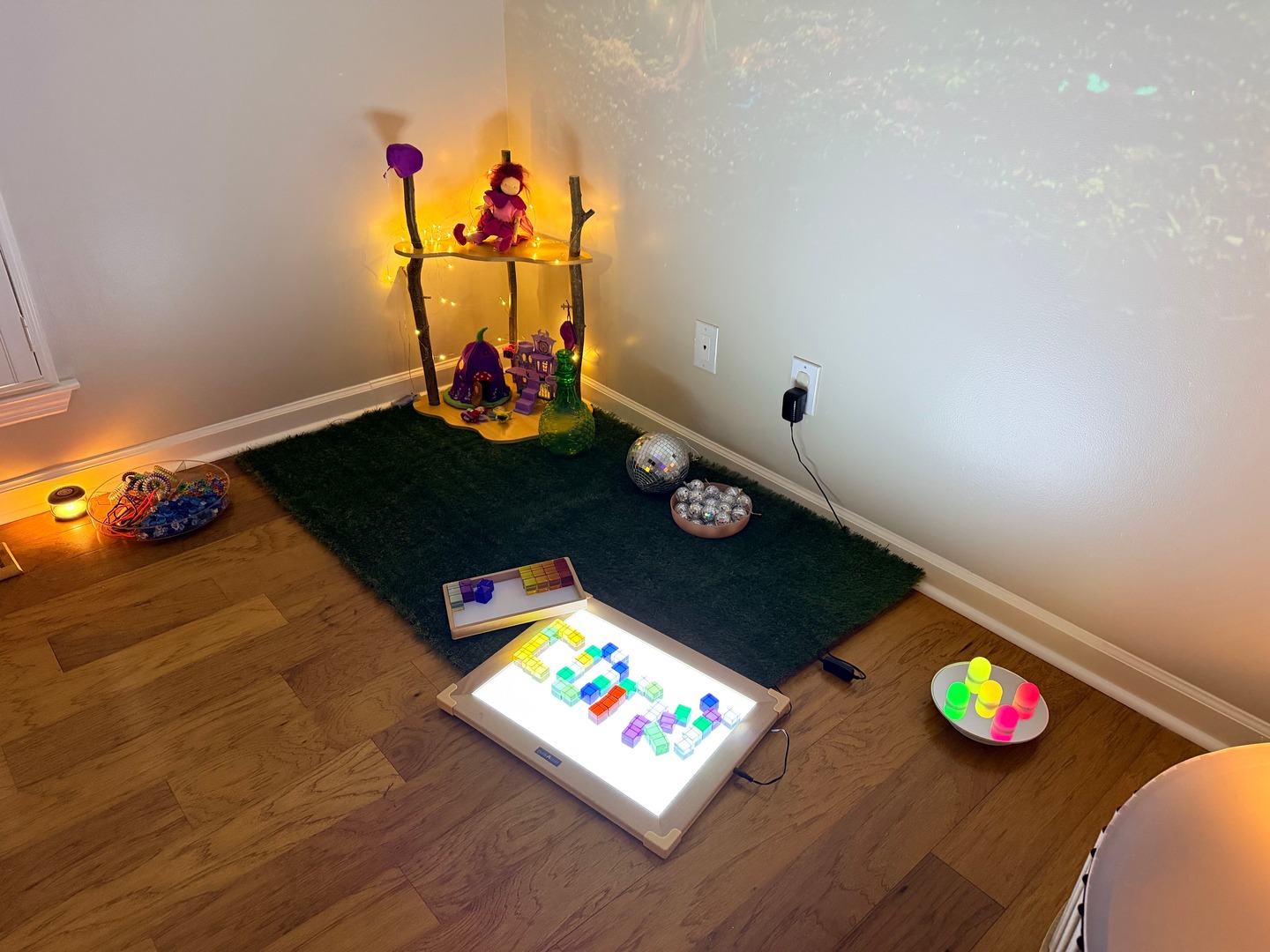
One morning, our light and projection space may feel like a magical woodland filled with fairies and sparkles. Another week, images across the walls and floor may carry children beneath the sea or into a world of color, shadows, and shapes.
The space can feel completely different with just a few thoughtful changes. We'll follow what catches the children's attention and use light, projections, and open-ended materials to give them fresh ways to explore it.
When the environment becomes a teacher In Reggio-inspired learning, the environment is often described as the third teacher. A thoughtfully prepared space can invite questions, encourage new ideas, and give children room to explore without showing them one "right" way to begin.
Light is one of the many languages children can use to investigate and express their ideas. Projectors move images across the walls, floor, materials, and even the children themselves. Light tables make translucent pieces glow. Shadows shift as children move, and familiar objects suddenly look different.
A child might begin by sorting colorful pieces on a light table. Then they may stack them, build with them, notice how the colors overlap, or create something we never would've imagined.
That freedom is where so much meaningful learning begins. A space shaped by children's interests
This room isn't designed to look the same all year. If the children are especially curious about ocean life, it can become an underwater world. If they're drawn to woodland creatures, color, movement, or construction, we can change the projections and materials to help them keep exploring those ideas.
We'll pay attention to what the children return to, talk about, and wonder over, then prepare a new invitation that helps them look a little closer, try another idea, or express what they're thinking in a different way.
Every child at The Corky Lily will have access to this space at least one day each week, and often more. That gives children regular opportunities to explore while still leaving room for the environment to change alongside their interests.
Made for our youngest learners, too We've intentionally kept furniture to a minimum so children have room to move freely through the projections and materials. This also makes the space welcoming for even our youngest learners.
An infant may crawl through light moving across the floor. A toddler may notice a shadow and try to catch it. An older child may use glowing tiles to build a race car, a home, or a creation that doesn't need a name at all.
Every child can meet the experience in a way that fits their own pace and stage of development. Imagination without a limit
One of our favorite things about young children is that they haven't learned to place limits on their ideas. A tube intended for rolling balls may become a megaphone. Magnetic tiles may become a Formula 1 car. A projection may inspire a story, a dance, or a whole new world.
Children don't need everything to have a single purpose. When they're given open-ended materials and time to explore, they show us possibilities we might've missed.
During their weekly time in this space, children can experiment with cause and effect, notice changes in color and shadow, build language around what they see, and use movement and materials to share their ideas. They're building creativity, curiosity, confidence, and problem-solving through experiences that begin with their own wonder.
The little moments matter most, and sometimes all it takes is a little light to help a new idea shine.